

On April 14th, hundreds of small business owners across the country opened an email and found out they no longer had a storefront.
Literally no warning. One email, and ten days to get their inventory out.
Painted Tree Boutiques operated across more than 60 locations nationwide, functioning essentially as a brick-and-mortar Etsy — small vendors leased booth space inside a shared retail environment and sold their handmade goods, home décor, jewelry, and clothing directly to shoppers. For a lot of those vendors, that booth was their business.
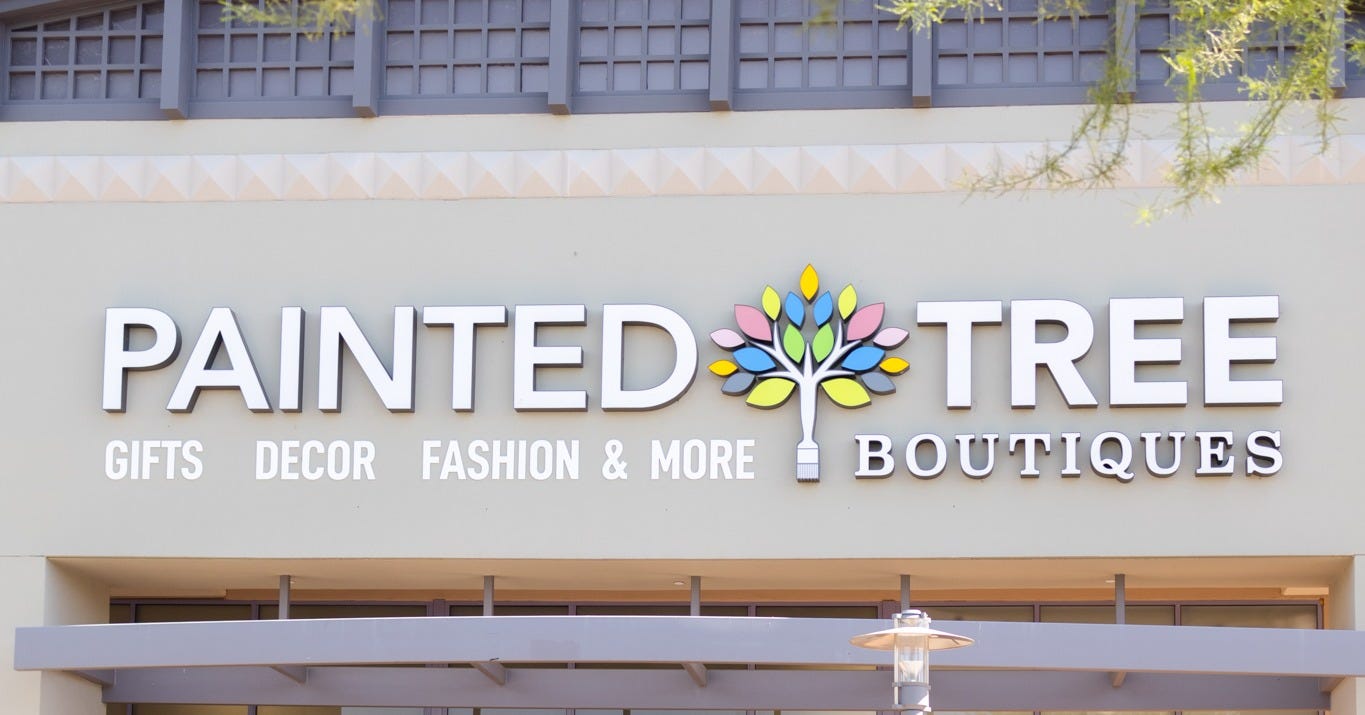
The company confirmed it had ceased all business operations and would be filing for Chapter 7 bankruptcy, effective immediately. Vendors who had just paid rent and security deposits were told not to expect those funds back. In the days that followed, some vendors showed up to find their inventory had been stolen.
I’ve been sitting with this story for a few days. Not because it’s unusual — unfortunately — but because it names something we talk about at startWorks constantly, and rarely get to say this plainly.
The platform is not the business. And in 2026, that distinction matters more than ever.
This never comes out of nowhere
Painted Tree’s closure is painful and specific. But the pressure behind it is broad.
U.S. retailers shuttered over 8,200 stores in 2025 — a 12 percent increase over the year before, driven by rising tariff costs, heavy debt burdens, and shifting consumer habits. Large corporations like Walmart and Costco can absorb those pressures; smaller businesses, especially the independent shops that anchor main streets, often can’t. For many, tariffs became a tipping point.
Painted Tree’s own statement acknowledged it: rising costs, shifting market conditions, and the evolving nature of how people shop had presented challenges the company could not overcome.
That’s a corporate sentence for something very human: the math stopped working, and nobody had a plan for what came next.
For the vendors inside those stores, the math stopping isn’t abstract. It is their Booth rent already paid. Inventory already in place. A customer base built over months or years, tied to a physical location that no longer exists.
This is the risk that shared-space retail has always carried, and it’s a risk that often goes unspoken when the model is working. You get the foot traffic and the community. You get the lower barrier to a physical storefront. What you don’t always get is stability — because your business is sitting inside someone else’s infrastructure, and if that infrastructure cracks, it cracks on you first.
The harder conversation about how we support small businesses
The vendors at Painted Tree were doing what made sense — they found an accessible, community-oriented way to reach customers without the overhead of a standalone retail lease. That’s a reasonable decision that many small business owners dream of having access to. For a lot of them, it was the right one, until it wasn’t.
What I keep thinking about is the gap between what small business owners are told they need — a logo, a social presence, a booth at the market — and what actually creates stability over time.
At startWorks, we work with small businesses at the early stages, and the patterns we see are consistent. The ones who weather hard moments aren’t necessarily the ones who grew the fastest or had the best branding. They’re the ones who built — deliberately, sometimes slowly — something that belongs to them. A customer list they own. An online presence that doesn’t depend on a single platform staying solvent. Operational clarity about where revenue actually comes from and what a disruption would require them to do.
None of that is glamorous. It doesn’t make for a great market booth sign. But it’s the difference between a setback and a full stop.
What vendors can actually do right now
If you’re a Painted Tree vendor figuring out next steps, here’s where I’d start — as a framework for thinking through what actually matters in the next 30 to 90 days.
Own your customer relationships directly.
If you were relying on Painted Tree’s foot traffic to find you, the goal now is to close that gap. That means an email list, a direct social presence, or both — something where a disruption to someone else’s business doesn’t automatically mean a disruption to yours. If you have past customers who loved your work, this is the moment to reach them wherever you have contact, and tell them where you’re going next.
Clarify your actual revenue picture before you commit to a new space.
The urgency to find a replacement booth is understandable. But before you sign another lease or commit to another shared space, it’s worth understanding what your revenue looked like at Painted Tree — what months were strong, what drove sales, what your margins actually were after rent and commission. That information tells you what kind of next step makes sense, and it protects you from recreating the same structural risk in a new location.
Build one stable online channel.
You don’t need to be everywhere. But having a place that belongs to you — a simple website, an Etsy or similar shop that you control, a Google Business profile with your contact info — means customers can find you even when physical circumstances change.
Look for community, not just space.
Several organizations and markets have stepped up to offer Painted Tree vendors free space and support in the aftermath. The Williamson, Inc. Chamber of Commerce is hosting a free two-day vendor market in Franklin, Tennessee, specifically for impacted vendors. Local maker markets, co-ops, and business associations are actively reaching out. If you’re navigating this, you don’t have to do it alone — and the people most worth connecting with right now are the ones who showed up without being asked.
What startWorks can do to help
We built startWorks because the early stages of running a small business are genuinely hard, and the support that exists for that stage is scattered, expensive, or aimed at the wrong things.
We help small business owners — creatives, makers, solopreneurs, early-stage founders — get stable. That means working through the operational basics that make a business resilient: understanding your revenue, building systems you own, thinking through what growth actually looks like given your real capacity.
If you’re a Painted Tree vendor and you want to talk through what comes next — an actual conversation — we’re available for that. The links below will get you there.
And if you’re not a vendor but you know someone who is, consider sharing this. The most useful thing most of us can do right now is make sure people who are rebuilding know where to find support.
Painted Tree’s statement said the company was never just a store — that it was a gathering place, a launchpad for dreamers.
I believe that was true. The vendors who built their businesses inside those walls weren’t wrong to believe in the model. They were right to want community, accessibility, and a lower barrier to putting their work in front of people. Those instincts are good instincts.
What the retail environment in 2026 keeps teaching us, harder each year, is that the infrastructure beneath a small business matters as much as the work on top of it. Not instead of the work — alongside it.
The vendors who are going to be okay aren’t the ones with the most Instagram followers or the most polished branding. They’re the ones who, in the next few months, build something that belongs entirely to them.
That’s what we’re here to help with.

Let’s build what’s next.
👉 Interested in joining? We cannot wait to meet you! Fill out this form to be contacted by one of our concierges. Ready to jump right in? Visit https://buy.stripe.com/5kA8zh9UGaRA1ri9AL to join.
👉 Follow us On Instagram and help us reach 1,000 followers!